responsibility

Who are you?

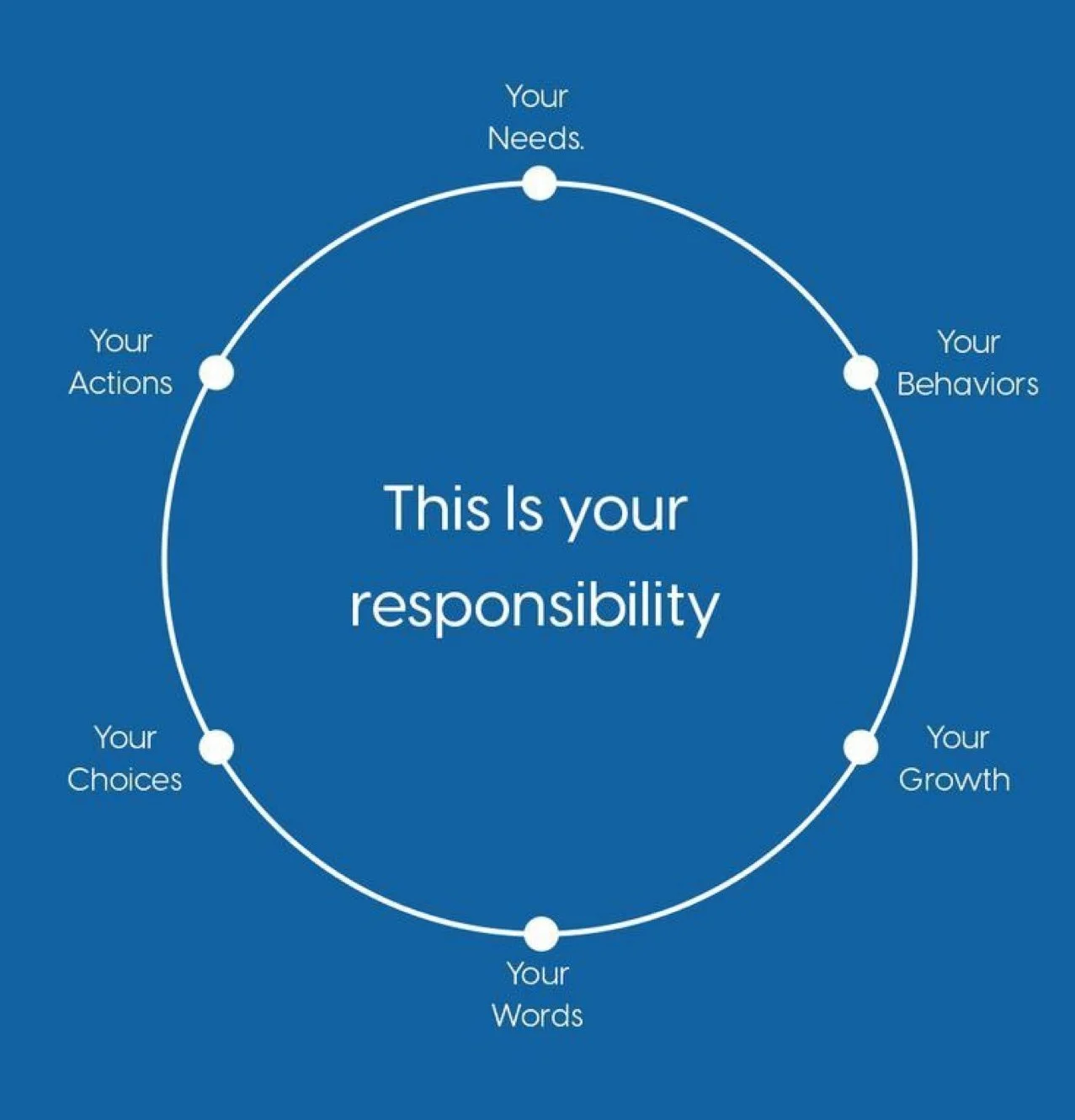
I have lived through decades of love, loss, and transformation, and I now understand a simple truth: my wellbeing is my responsibility. Not my family’s, not my children’s, and not society’s. When you find the courage to let go, you also accept that the safety net you hope might catch you may not. This is not bitterness; it is clarity. By no longer expecting anyone else to carry me, I have learned to stand taller on my own.

“Do not use your energy to worry. Life is too short to worry about stupid things. Have fun. Fall in love. Regret nothing and do not let people bring you down. Study, think, create and grow. Teach yourself and teach others.”
— Professor Richard Feynman

Inner discipline creates outer results

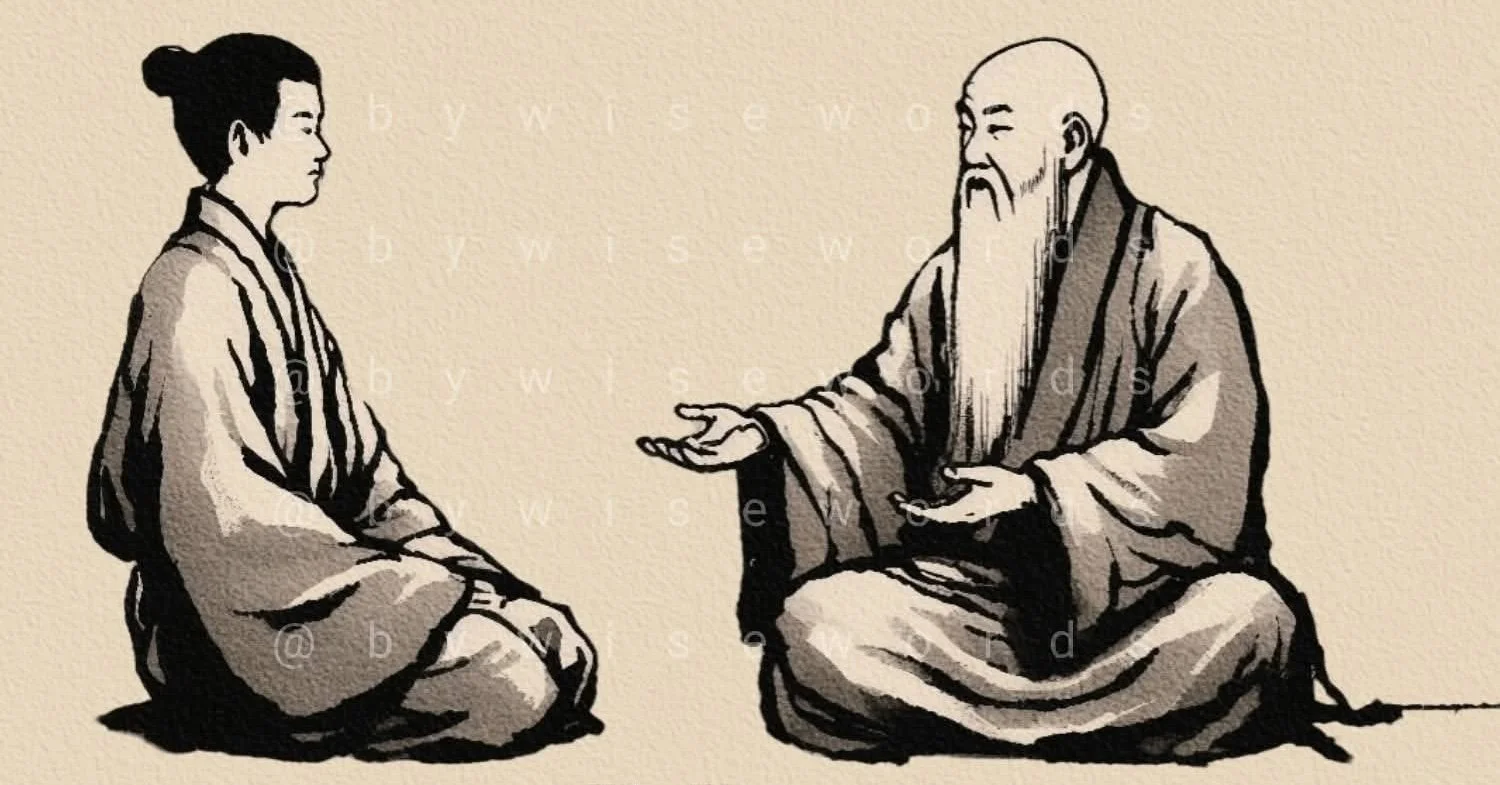
Image c/o @bywisewords

I think your mindset, your words, your reactions, and your choices shape your experience of life more than external circumstances do. As they emphasise awareness (what you say, think, and focus on), growth through challenge, gratitude, and the understanding that change and connection are essential to becoming a better version of yourself.
Here are 11 life lessons:

  1. The less you say, the more your words will matter.

  2. Don’t take everything personally as not everyone thinks about you as much as you do.

  3. When you focus on problems, you’ll have more problems. When you focus on possibilities, you’ll have more opportunities.

  4. No matter how much it hurts now, someday you will look back and realise that your struggle changes your life for the better.

  5. You meet people for a reason, either you need them to change your life or you’re the one that will change theirs.

  6. Never be afraid to change something new. Life gets boring when you stay within the limits of what you already know.

  7. You’ll never truly know the value of the moment until it becomes a memory.

  8. Once you begin taking note of the things you are grateful for, you’ll begin to lose sight of the things that you lack.

  9. If you do not have control of your mouth, you’ll do not have control over your future.

  10. Life is a mirror and will reflect back to the thinker what he thinks into it.

  11. The only person you have to face in the morning is yourself. Be unbeatable.


Be kind to yourself

In Western cultures, motivation is often driven by harsh self-talk and shame becomes the tool used to push forward, yet shame rarely creates lasting change. Instead, it fuels a cycle of resistance and self-sabotage. When you shame yourself for a habit or behaviour, you create an inner split. One part becomes the harsh inner critic, while another takes on the role of the rebellious child. These parts work against each other, consuming energy that could otherwise support meaningful change.

I think self-compassion offers a different approach. When you slip up, treat yourself as you would a close friend who is struggling, with kindness, understanding, and encouragement to try again. This approach does not remove responsibility or excuse behaviour. It recognises that sustainable change grows from self-acceptance, not self-criticism.


Everything has a season

As a coach I don’t take responsibility for the outcome as that belongs to the client. I’m not a performance or outcome-only coach, as AI is better at that, for example:
“How to make a plan.”
“Here’s a checklist.”
“Here’s how to do X, Y and Z.”

For me, coaching is about human connection. It’s about creating a space where we can be vulnerable, reflective, and curious. A space to explore what gets in the way when we are navigating the situations we find ourselves in.

If any of this resonates, you are welcome to book a complimentary 30-minute discovery call to explore how coaching can support your journey. Link here

“More is lost by indecision than wrong decision. Indecision is the thief of opportunity.”
— ​Marcus Tullius Cicero

Employee responsibility (part two)

How can employees tackle the topic of diversity and inclusion?

I think understanding diversity and inclusion requires a nuanced approach that acknowledges the complexity of human experience. Rather than viewing diversity solely through the lens of distinct categories like gender or ethnicity, it's crucial to recognise the interconnectedness of these identities. For example, the workplace experiences of women can vary significantly depending on factors such as geographical location or socioeconomic background. And in this context, fostering inclusion becomes paramount in harnessing the true potential of diversity.


Employee responsibility (part one)

What concrete steps can employees take to enhance diversity and inclusion?             

There are several ways employees can play an active role in creating an inclusive workplace where diverse perspectives are celebrated, and everyone has the opportunity to thrive. Employees can take concrete steps to enhance diversity and inclusion in the workplace by first recognising role models who embody these principles, serving as inspiration and exemplifying the value of embracing differences. I think by improving dialogue and awareness around intersectionality and acknowledging the interconnectedness of various dimensions of diversity like race, gender, age, and socio-economic status will help to create an inclusive environment where all perspectives are valued. Also, by highlighting the practical advantages of diverse teams, such as heightened innovation and problem-solving capabilities, reinforces the business case for diversity and encourages broader participation. Finally, by facilitating open discussions and knowledge-sharing forums allows employees to exchange successful strategies and approaches this will provide a culture of continuous learning and improvement in promoting diversity and inclusion.


Accepting responsibility

It’s always less desirable to give nuanced, complex, or sophisticated answers which require input from multiple parts, be it society or yourself. People have always wanted simple answers. Whenever anything happens people need to know whose fault it is and if possible, embody blame into one person, for example, immigrants, the European Union, it’s always somebody else. “It’s never us!” because people love to have a solution that is both not nuanced, not sophisticated and not our fault. Acknowledging the effects of your behaviour and choices will open you up to new experiences, improves your mental health which in turn, allows you to build a sense of control over your life. I think taking responsibility for your own actions is how you’ll gain a deep understanding of your true self.


This level of mindfulness

My heroes have always had a "growth mindset”, believing they can learn, grow, and change throughout their entire lives. It’s incredibly refreshing to be the designer of what happens next and not being a pawn in the system. First you have to take responsibility, then you need to find an interesting problem, then you take your customer on the journey to solve their problem. Never use fear, shame, and anger to get people to do what you want you want them to do.

We all remember the saying, “failure is not an option!” and if this is the case, then neither is success. Therefore, what we need is a process that you can do over and over again. And the fuel you need for that is possibility, because if we can see it in our heads that it’s possible then it’s easier to own it. This is possible and once it’s possible then you can be responsible, and once you can be responsible, then you can build a process. Don’t seek perfection, seek possibilities.

Learn from yesterday, live for today, hope for tomorrow. The important thing is not to stop questioning.
— Albert Einstein